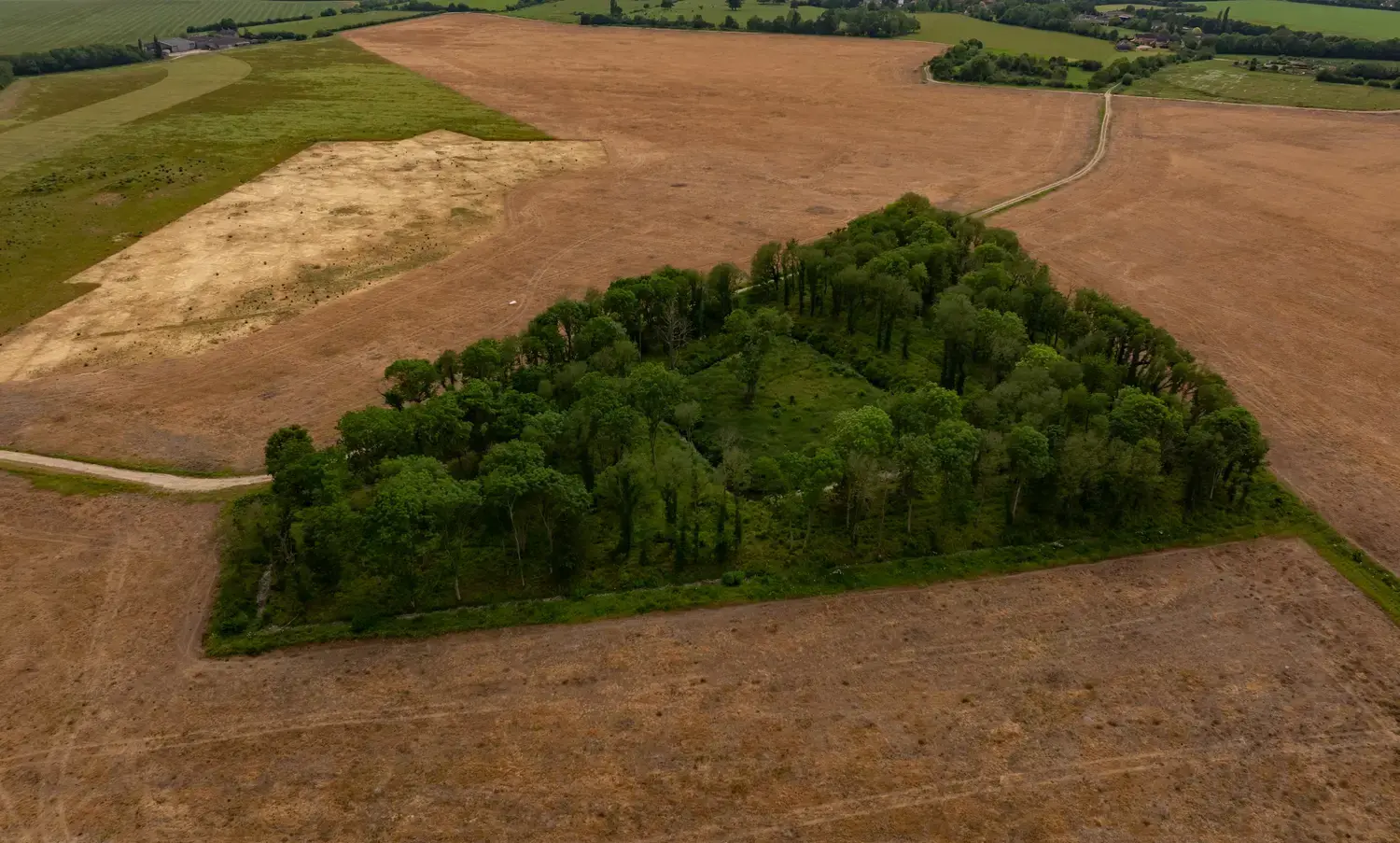

A cornerstone of Alconbury Weald’s green infrastructure, Prestley Country Park will stretch over 63 hectares (150 acres) and provide a multifunctional landscape combining biodiversity and heritage with health, recreation and education.
We want Prestley Country Park to be a local treasure - shaped for the community, by the community – and each phase will be influenced by further community involvement, and in line with the relevant planning approvals and obligations.
Prestley Country Park will evolve over the next five years (2026-2031) and mature over the next 20 years and beyond. Rather than wait for all elements to be established, the park will be delivered and activated in phases.
Working with Nene Park Trust
Urban&Civic, Alconbury Weald’s master developer, is working in partnership with Nene Park Trust to help shape not only the physical design, but the culture, care and community that will be embodied in Prestley Country Park.
Nene Park Trust is a registered charity with over forty years of experience in creating, managing and bringing complex public landscapes to life. Project managed by Shelley Cant, the team will help bring the vision for Prestley County Park to life: embedding biodiversity net gain, restoring heritage landscapes, integrating sustainable land management and organising events and activities that inspire connection through learning, volunteering and celebration.
Phased delivery
Prestley Country Park will be delivered in phases, unfolding with the growth of Alconbury Weald. Over the coming months you will see preparatory work on the ground and detailed plans for the first phase, which have been consulted on, will be finalised and will have a planning application submitted.
What's happening now?
Archaeological investigations are taking place from September in the area south of Prestley Wood (Zone A1). Vegetation will be cut back and then the area will be excavated to an average depth of 0.50 metres by two 20-tonne 360° excavators, with soil removed by two dumper trucks.
Once the area has been stripped and mapped, all archaeological features will be investigated by hand and catalogued. The work is being carried out by Oxford Archaeology and should be completed by Christmas (weather permitting).
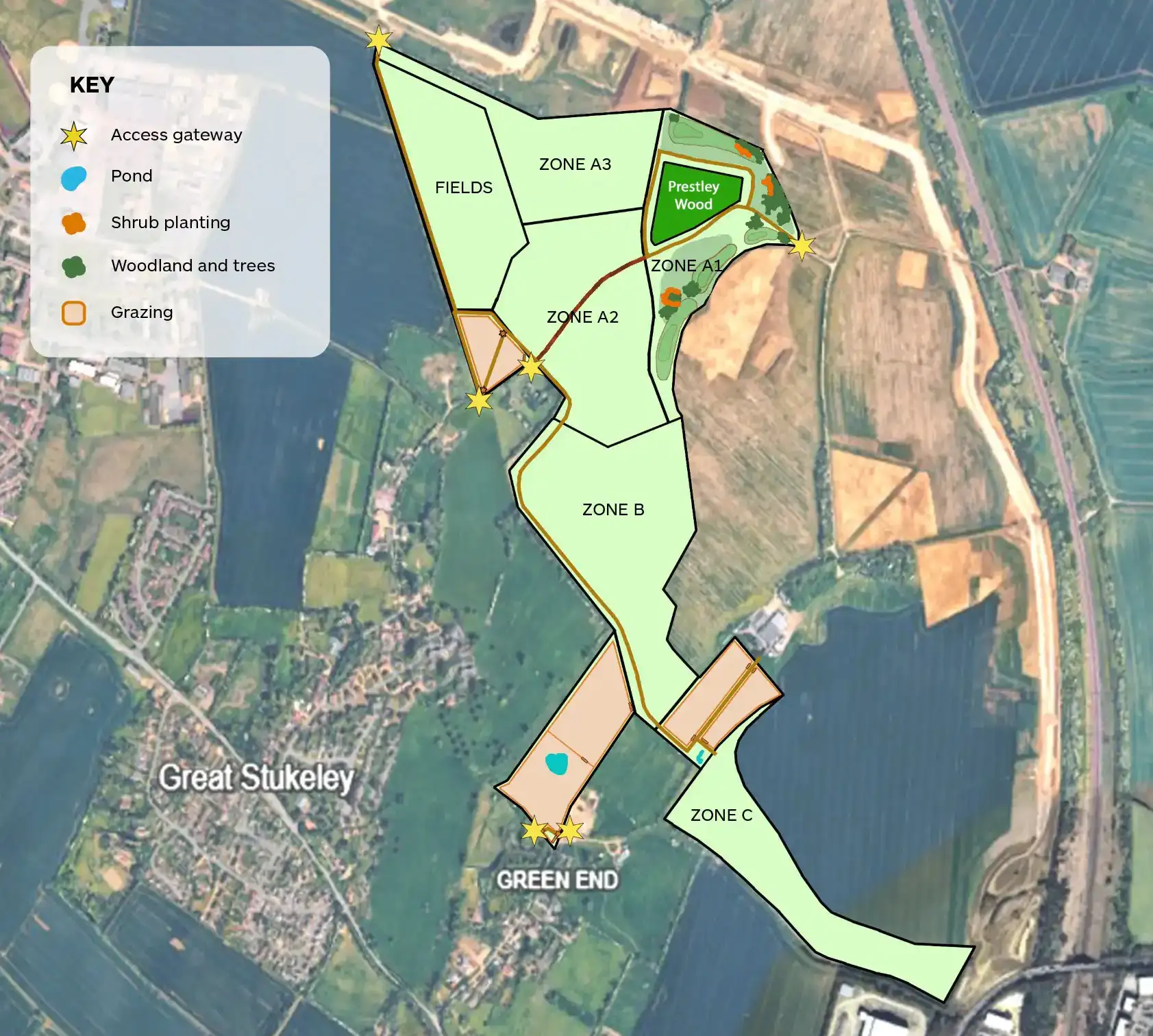
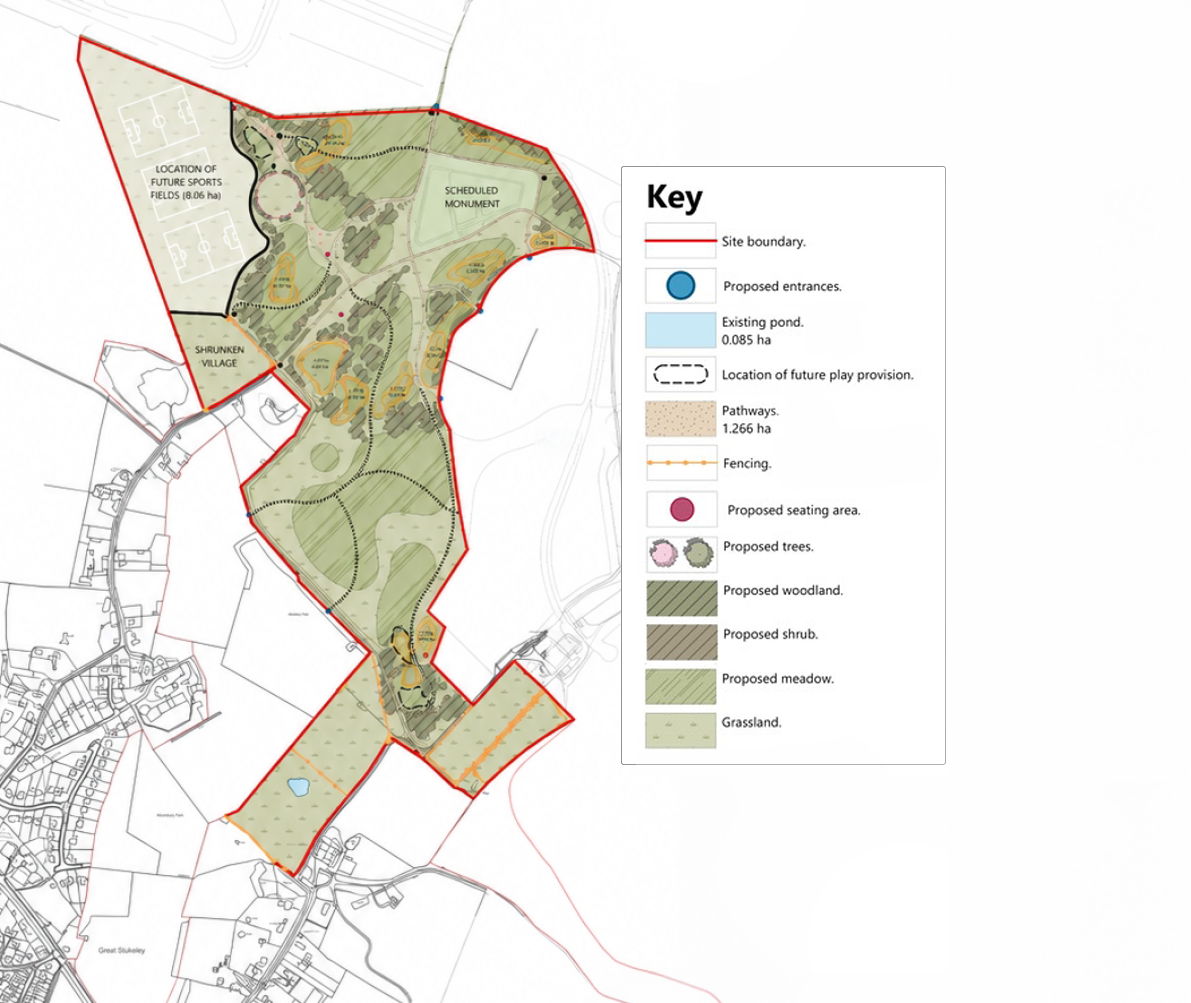
From 7 September, fencing will be installed (in the orange shaded areas) to support sheep grazing. The fencing will enable carefully managed grazing as part of the long-term management of the country park’s grasslands, starting this winter. Grazing will be light and seasonal, allowing grasses and wildflowers to grow, flower and set seed during spring and early summer, with grazing used later in the year to manage and maintain a varied grassland habitat. This approach will provide better conditions for wildflowers, insects, small mammals and birds to flourish.
Over the next couple of weeks, work will begin to prepare the remaining areas within Prestley Country Park for a more wildlife-friendly future. Using standard agricultural machinery, the existing vegetation will first be cut before the ground is drilled with an amenity grass mix. This is an important first step in moving the land away from its previous intensive agricultural management and towards grassland that can be managed for greater biodiversity. Initially, the new grassland growth will be controlled through cutting, gradually reducing excess nutrients in the soil. Lower nutrient levels will make it easier to establish more diverse, species-rich grassland and wildflower meadows in the future.
Remediation work around the old Farmhouse is also underway. While the work is carried out the farm track will be closed, with the path diverted onto the historic Right of Way route. It is hoped the Farmhouse will play an exciting role in the Country Park, subject to an additional consultation with the local community and the evolution of future plans.
Coming soon
Fencing will be installed around Prestley Wood to support the new planting taking place to enhance the woodland setting. Some volunteer opportunities are being developed with Nene Park Trust to support this activity.
Some earthworks will also take place to help shape the character of the land by creating natural slopes, swales, and bunds. Future tree and shrub planting will then enable the creation of new habitats, as well as providing different spaces for people to explore and quiet areas, play spaces and interactions with nature.
Get involved
Get involved
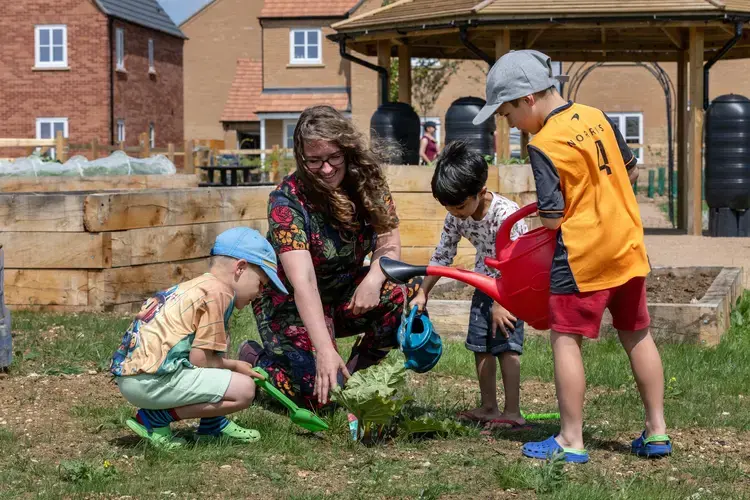
The plans will continue to evolve, with volunteer groups and community events bringing the Park to life.
If you would like to get involved, please email shelley.cant@neneparktrust.org.uk
Creating Prestley Country Park
As well as a refuge for wildlife and biodiversity, a resource for climate resilience and education, and a celebration of heritage, Prestley Country Park will be a place for families to make memories and communities to thrive.
Protected heritage
Prestley Country Park is named after the historic Prestley Manor, which included the manor house protected by the double moated site, which is all we can now see. The land was owned by Earl David, younger brother of King William I of Scotland, and granted to the Senliz Family, the Earls of Huntingdon, in the early 13th century. The manor remained in his family’s ownership until the mid-14th century, when it passed to Nicholas Stukeley.
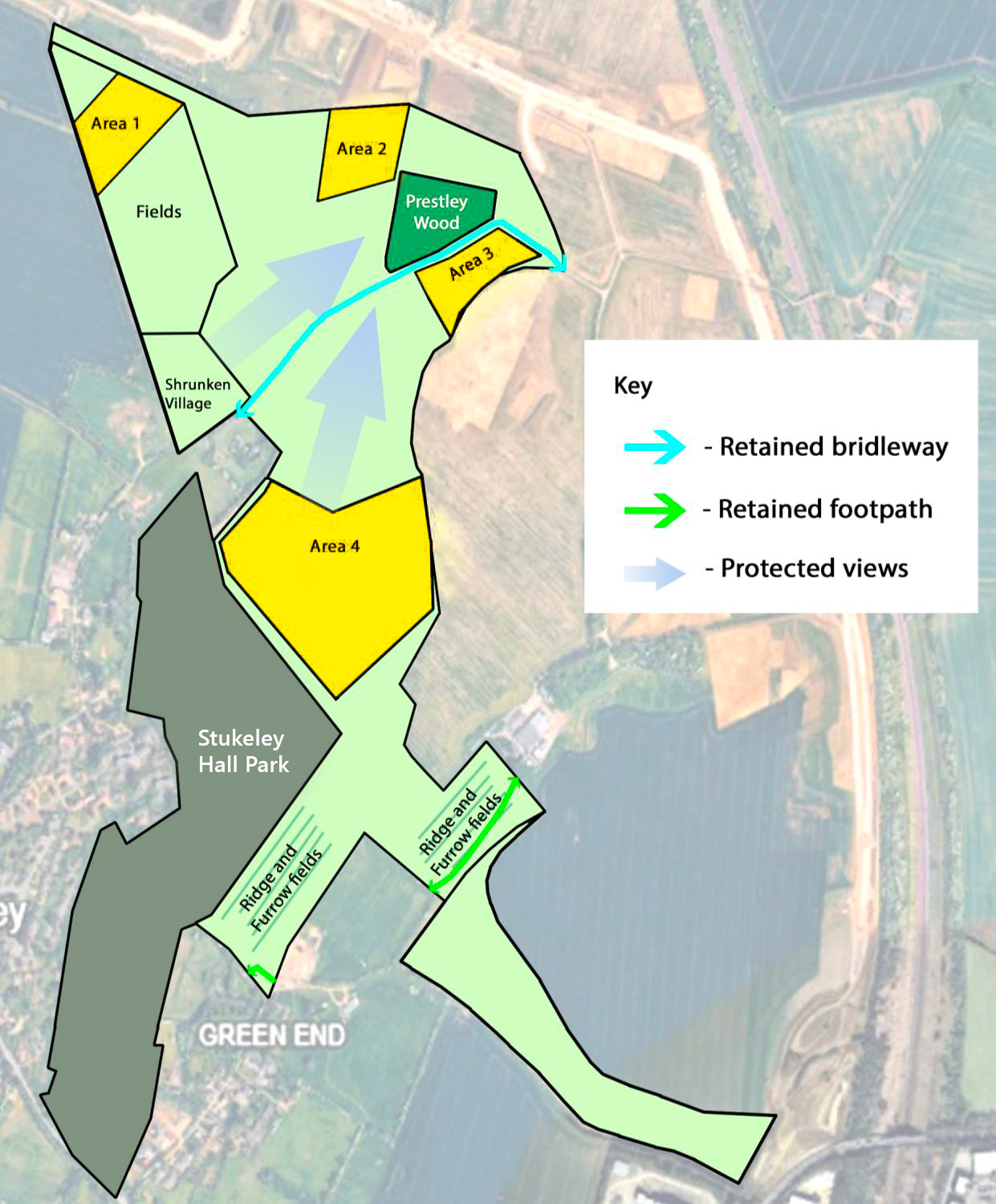
The manor house once stood at the heart of Prestley Wood, and a phased management plan to preserve the scheduled monument and enhance its setting has been agreed with Historic England and Huntingdonshire District Council.
Alongside Prestley Wood, there is archaeological evidence of a medieval hamlet just north of The Stukeleys, which has now disappeared (marked on the plan as a Shrunken Village). There are also four other areas that are archaeologically sensitive (shaded in yellow) with evidence of historic agricultural practices, marked by ridge and furrow patterns in the earth. To protect this heritage, low impact approaches such as grassland with mown pathways and traditional grazing is proposed in these areas.
The designs have been shaped to preserve views towards Prestley Wood and along the historic tracks, with new tree and hedgerow planting to help screen and soften views of the nearby USAF base and the new homes coming forward in the second phase of Alconbury Weald.
Stukeley Hall Park sits adjacent to Prestley Country Park and was purchased by Urban&Civic in discussion with The Stukeleys to ensure the green space was maintained between the communities of Little and Great Stukeley and Alconbury Weald: with the three connected by the green space, but maintaining their unique and separate identities.
Design proposals
In addition to protecting and enhancing existing features, new planting and landscaping will improve amenity, access and biodiversity.
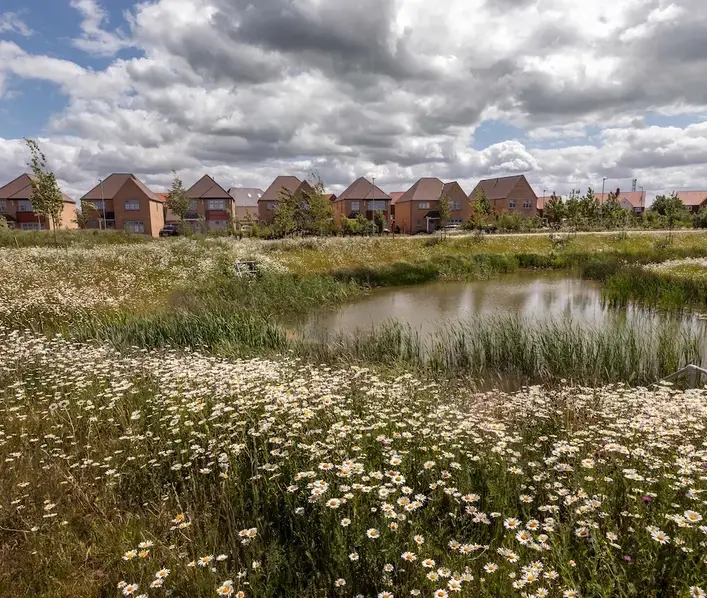
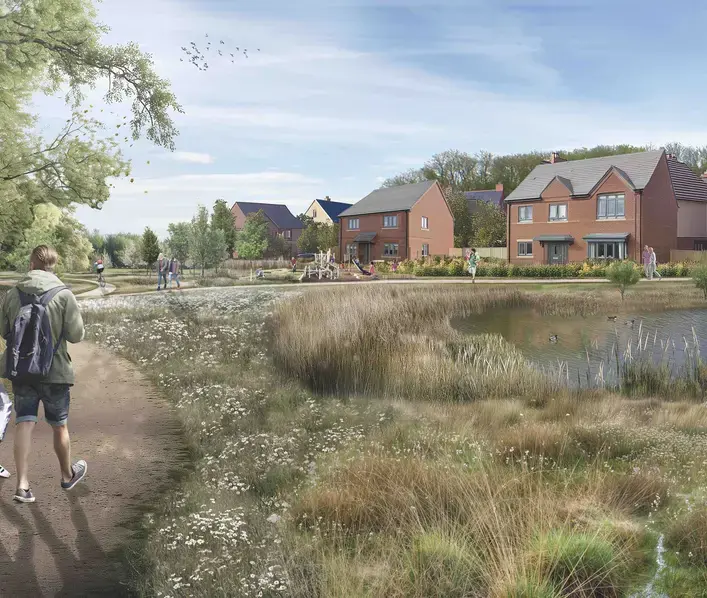
- Meadows will form the green heart of the Country Park, creating sweeping, open views that contrast with the quiet seclusion of the woodlands. This will include species-rich wildflower and wet meadows in lower-lying areas, as well as more robust parkland grasslands closer to paths and play spaces.
- Woodlands will form vibrant, resilient ecosystems that contribute to carbon storage, shelter and seasonal interest. Over time, conservation woodland, seasonal showstoppers (like the proposed blossom tree circle), orchards, working forestry blocks and coppices will be established to create a mosaic of habitats for nature.
- The Fields will begin life as open grassed spaces where local communities can gather, play informal games and enjoy everyday park life. As Prestley Country Park evolves, wider discussions around sports uses and locations will be finalised with the community and planning authorities, shaped by the experience of residents and park users.
- Designated areas will be managed with sustainable grazing practices to build soil health, structural diversity and wildflowers. These landscapes will also showcase orchards, foraging routes, overwinter crops and grain-rich margins for birds, together with features that recall historic farming patterns.
- Within the proposed blossom tree circle is a grassed area with seating and picnic benches that has been designated as event space. It is anticipated that this will be a focal point for organised events such as community workshops and educational demonstrations as well as health and wellbeing sessions.
- Paths will be designed to respond to the specific needs of each area. Where some routes will prioritise inclusive access for different abilities and year-round use, others will be more natural, informal routes that invite exploration while respecting the landscape.
- Climate resilience will be incorporated within the design. Carefully located ponds and wetland features will store, cleanse and celebrate water, while drought resilience, water-wise planting and sensitive water level management will support the park’s long-term adaptability in a changing climate.
- In the longer term, areas have been set aside to support play spaces, additional recreational facilities and parking. Once the landscape is established, further work to support delivery of these - and consultation to shape them - will take place.